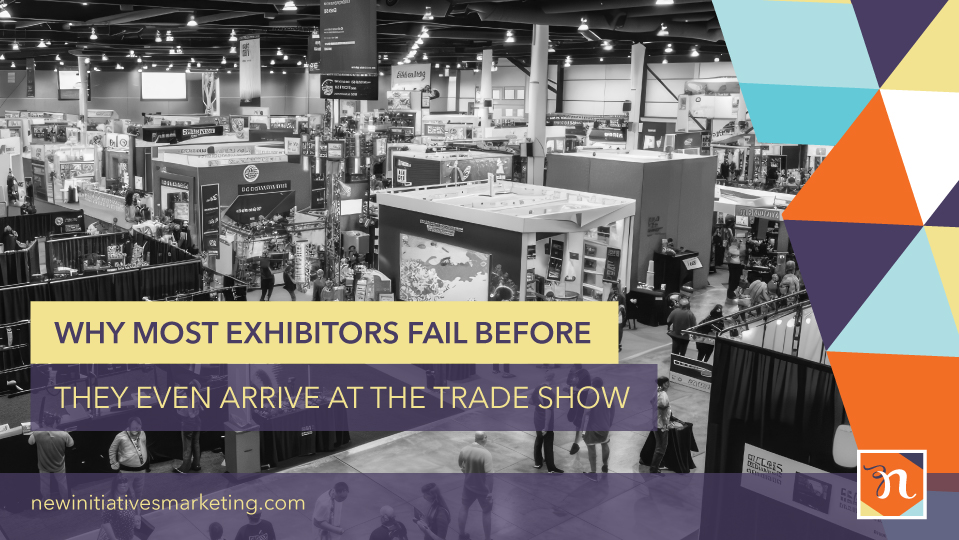
If trade shows used to work for your business and now feel expensive, exhausting, and underwhelming, I hear this constantly.
Almost every CEO I sit down with at a certain stage of growth asks the same question: We keep showing up. We keep spending the money. We keep sending the right people. So why does the impact feel so limited?
I’ve been on both sides of this. I’ve been the person wandering a six-building trade show in Berlin with no plan and no direction. I’ve been inside a global tech company where they had an entire internal team dedicated to trade shows, but only for logistics, not for actually generating revenue from the event. And for the last fifteen-plus years, I’ve heard client after client tell me the same thing: “Yeah, we go to trade shows, but they don’t really work.”
The uncomfortable truth is not that trade shows are broken. It’s that the way most companies approach them no longer matches the stage of growth they’re in.
Trade Shows Are Rarely the Real Problem
At a certain point, most companies have the surface-level mechanics figured out. They choose the right events. They invest in the booth. They send knowledgeable sales and technical experts.
On paper, everything looks correct.
And yet, when the show ends, the internal debrief sounds the same every time. “It was a good show. We had some conversations. We’ll see what comes of it.”
“It was a good show” doesn’t tell you much, does it? When I push further — Was the booth broken? Did your demos fail? Did your people not show up? The answer is always no. Everything worked. They’re just not sure anyone’s going to buy from them as a result.
That’s not a trade show problem. That’s a strategy problem.
Activity Without Strategy Feels Productive…Until It Doesn’t
Trade shows often expose a deeper issue that exists across a company’s entire marketing effort: the reliance on activity rather than intent.
For many sales-led organisations, trade shows became a default growth lever early on. They worked because the market was less crowded, the buying journey was shorter, and personal relationships carried more weight. As the company grows, that same approach starts to plateau.
More shows do not automatically mean more revenue. A bigger booth does not create differentiation. Better swag does not replace clarity about who you are and why someone should choose you.
What’s missing is not effort. It’s alignment between what you’re doing at the show and the broader revenue engine that should be running underneath it.
The Expertise Trap
One of the most common assumptions I encounter, and I say this with genuine respect, because these are brilliant technical leaders, is this: “We’re excellent at what we do. People should want to talk to us.”
Professional expertise is essential. But it does not translate into trade show effectiveness on its own. I learned this the hard way myself. Early in my career, I was sent to a massive trade show in Germany by my boss at the Financial Times. The direction I got? “Go learn some stuff.” I walked in, looked around, and quickly realised I had no idea who to talk to, what to ask, or which keynotes to attend. It was expensive, well-intentioned, and taught me I should have had a plan.
Trade shows are not neutral environments. They are crowded, distracting, and overwhelming for the people walking them. Buyers are not wandering the floor hoping to discover excellence. They’re trying to survive sensory overload while making sense of dozens of similar messages.
Without a clear strategy guiding why you’re there, who you want to meet, what you want them to understand, and what should happen after the conversation, even the best teams blend into the noise.
Trade Shows as a Symptom of a Larger Disconnect
When trade shows underperform, it’s rarely an isolated failure. It usually signals something deeper is off.
Messaging that hasn’t been pressure-tested against real buyer insight. A lack of clarity around who the company is actually for. No defined customer journey beyond initial awareness. Marketing and sales operating in parallel rather than together. Follow-up that relies on memory instead of systems… Bob’s got some business cards, Julie’s got others, nobody scanned the badges consistently, and by the time everyone’s back in the office, the momentum is gone.
In those conditions, trade shows become expensive visibility exercises rather than revenue-generating investments.
Strategy Changes the Role Trade Shows Play
When trade shows are anchored to a clear strategy, their role shifts entirely. They stop being standalone events and start functioning as accelerators within a broader growth system.
Instead of asking “Did the show work?” leaders can answer much more meaningful questions. Did we attract the right conversations? Did attendees understand our difference clearly? Did the show advance prospects through the buying journey? Did marketing and sales know exactly what to do next?
That level of clarity doesn’t come from better execution at the booth. It comes from doing the strategic work before the booth ever arrives on the show floor. It comes from understanding what your clients and partners actually value about working with you, not what you assume they value, and building your presence around that.
Why This Is a CEO-Level Issue
Trade shows often get delegated to marketing or sales because they feel tactical. In reality, they reflect leadership decisions about positioning, priorities, and investment.
When strategy is absent, teams compensate with effort. More shows. More materials. More activity. I’ve watched companies pour increasing budgets into trade shows year after year, each time hoping that the next one will be the one that “finally works” — without ever questioning the strategic foundation underneath. Over time, that creates fatigue without progress.
When strategy is present, teams make fewer assumptions, focus their energy, and measure success differently. That’s when trade shows regain their value, and that’s when the return on all that time, money, and effort finally becomes visible.
The Real Question to Ask
The most important question isn’t whether you should keep doing trade shows.
It’s this: Do our marketing investments work together to move the right buyers toward revenue, or are we hoping activity will eventually add up?
If the answer feels unclear, trade shows are simply making that visible.
I’ve spent my career helping B2B companies move past this point, building the strategic marketing foundation that makes every tactic, including trade shows, actually work. If your trade show investment feels heavy and the return feels light, the problem isn’t the event.
It’s time to look upstream.